

Industrial Ceramic Materials
for Custom Components
Selecting the right ceramic material is one of the most important decisions in determining the performance, lifespan, manufacturability, and cost of your component.
Associated Ceramics manufactures ceramic components using materials selected for specific performance properties, such as resistance to extreme temperatures, electrical insulation, thermal shock, and more. Explore the materials we use and what make each suitable for applications across industries ranging from transportation to appliances.
Whether you already know the material you need or are looking for guidance selecting the right one, our engineering team can help identify the best solution for your application.
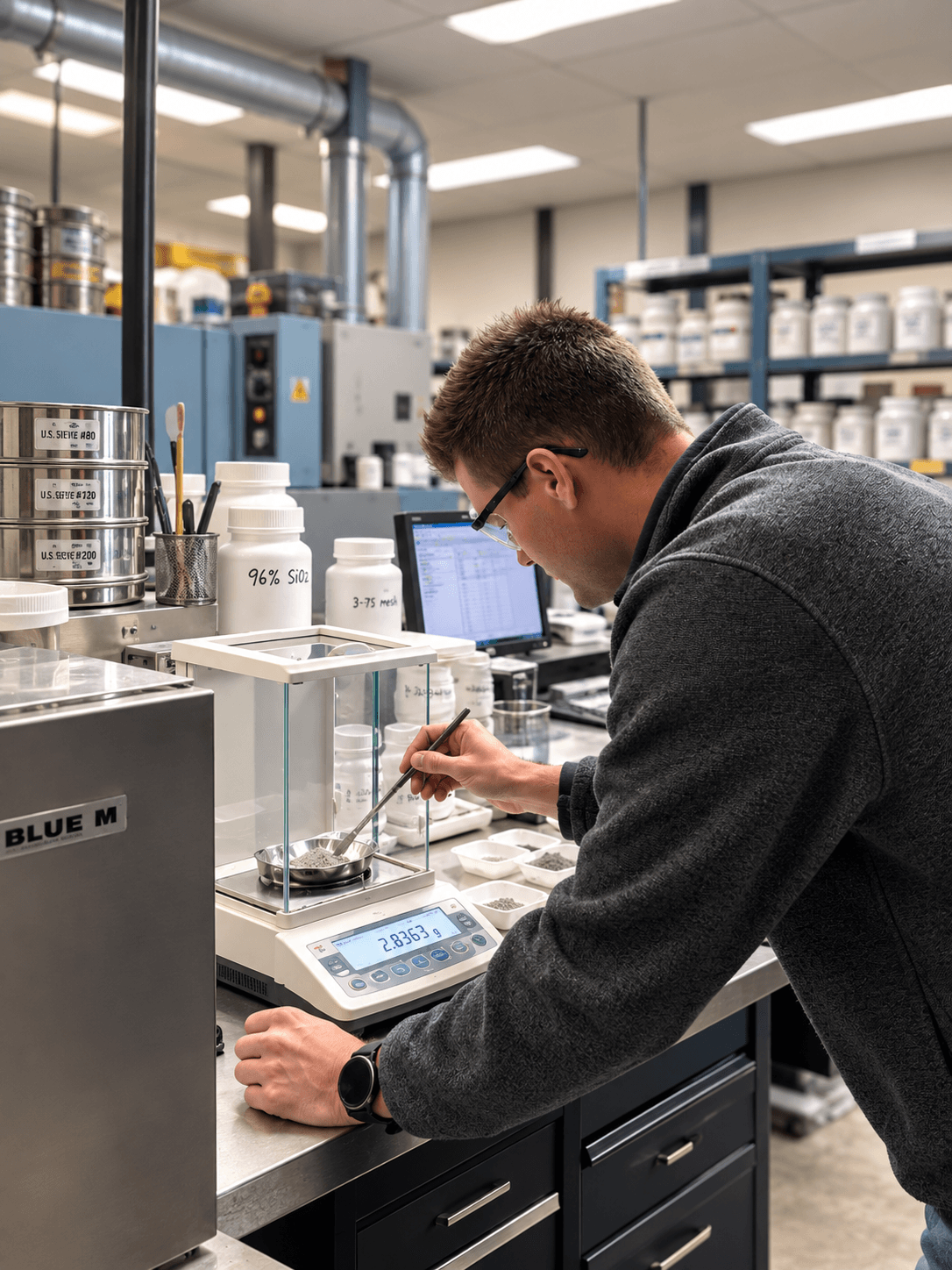
Find the Right Ceramic Material for Your Application
Alumina
The industry standard for high-performance ceramic components.
Alumina combines excellent electrical insulation, wear resistance, corrosion resistance, and high-temperature performance, making it one of the most versatile technical ceramics available. It is often selected when applications require high strength, dimensional stability, and long service life.
Common applications include:
- Electrical insulators
- Heating element supports
- Structural ceramic components
- Wear components
- Resistor assemblies
Best for: Electrical insulation, high temperatures, and wear resistance.
Cordierite
Engineered for exceptional thermal shock resistance.
Cordierite performs exceptionally well in applications exposed to rapid heating and cooling cycles where other materials may crack or fail. Its low thermal expansion makes it ideal for thermal processing applications and heating systems.
Common applications include:
- Igniter components
- Heating systems
- Thermal processing equipment
- Refractory components
- Temperature sensing assemblies
Best for: Thermal shock resistance and repeated temperature cycling.
Steatite
Cost-effective electrical insulation for high-volume production applications.
Steatite offers excellent dielectric properties while providing an economical solution for electrical insulation applications. It is commonly used in appliance, heating, and electrical industries where performance and cost efficiency must be balanced.
Common applications include:
- Electrical insulators
- Appliance components
- Terminal blocks
- Heating element supports
- Electrical assemblies
Best for: Electrical insulation and cost-sensitive applications.
Zirconia
The toughest engineering ceramic available for demanding mechanical applications.
Zirconia offers exceptional fracture toughness, impact resistance, and strength compared to traditional ceramic materials. It is often selected for applications involving mechanical loading, abrasion, and precision wear surfaces.
Common applications include:
- Precision wear components
- Mechanical assemblies
- High-strength structural parts
- Advanced industrial equipment
- Medical applications
Best for: Impact resistance, toughness, and mechanical strength.
Spinel
High-temperature performance with excellent chemical stability.
Spinel performs well in applications involving harsh environments, elevated temperatures, and demanding chemical conditions. Its combination of thermal stability and durability makes it suitable for specialized industrial applications.
Common applications include:
- Electrical components
- High-temperature assemblies
- Industrial processing equipment
- Specialty ceramic components
Best for: Chemical resistance and elevated temperature applications.
Wollastonite
An engineered ceramic for thermal processing and refractory applications.
Wollastonite offers a balance of thermal shock resistance, machinability, and cost efficiency, making it well suited for high-temperature processing environments.
Common applications include:
- Refractory shapes
- Thermal processing equipment
- Kiln components
- Heat management applications
Best for: Refractory applications and thermal processing environments.
Not Sure Which Material Is Right for Your Application?
Many customers come to us knowing the environment their component must survive in but not which ceramic material is best suited to the job.
If your application requires:
- Electrical insulation
- High-temperature performance
- Thermal shock resistance
- Corrosion resistance
- Wear resistance
- Complex geometries
- High-volume production consistency
Our engineering team can help identify the material and manufacturing process best suited for your application, or develop a custom formulation tailored to your application's performance requirements.
Why Manufacturers Choose Associated Ceramics
For more than six decades, manufacturers have trusted Associated Ceramics to deliver precision ceramic components for demanding applications.
Our capabilities include:
- Over 60 years of ceramic manufacturing experience
- Two U.S. manufacturing facilities
- Complete engineering support in-house
- ISO 9001:2015 certified manufacturing
- Capacity exceeding 1.5 million parts per day
- More than 290 million parts manufactured in 2024 and 2025
- Less than 0.5% annual product returns
- Prototype through production manufacturing support
When ceramic manufacturing cannot fail, manufacturers rely on Associated Ceramics to deliver quality parts, consistent production, and dependable lead times.
Frequently Asked Questions
What is the best ceramic material for high-temperature applications?
Alumina, Cordierite, and Spinel are commonly used for high-temperature environments, depending on whether strength, thermal shock resistance, or chemical stability is the priority.
What is the difference between alumina and zirconia ceramics?
Alumina is stronger in electrical insulation, wear resistance, and thermal stability, while zirconia offers significantly higher toughness and impact resistance.
How do I choose the right ceramic material for my application?
Material selection depends on key factors such as temperature, mechanical load, electrical requirements, chemical exposure, and wear conditions. Engineering review is often required for multi-condition applications.
What ceramic material is best for thermal shock resistance?
Cordierite is specifically engineered for thermal shock resistance and performs best in rapid heating and cooling environments.
What ceramic materials are used for electrical insulation?
Alumina and Steatite are most commonly used for electrical insulation, depending on whether performance or cost efficiency is the priority.
Can ceramic materials be used in high-wear environments?
Yes. Zirconia and Tungsten Carbide are commonly used in high-wear and abrasive environments due to their hardness and durability.
Do you manufacture custom ceramic components?
Yes. We manufacture custom ceramic components from prototype through high-volume production with in-house engineering support.
Ready to Discuss Your Application?
Whether you're developing a new component, searching for a better supplier, or scaling an existing design into production, our engineers are ready to help.