

Performance Properties
of Advanced Ceramic Materials
Ceramic materials are selected based on how they perform under real-world operating conditions—not just their composition.
At Associated Ceramics, we design and manufacture precise ceramic components that deliver predictable performance in extreme environments including high heat, electrical stress, abrasion, and chemical exposure.
We match material behavior to real-world operating conditions—then manufacture to tight tolerances at scale.
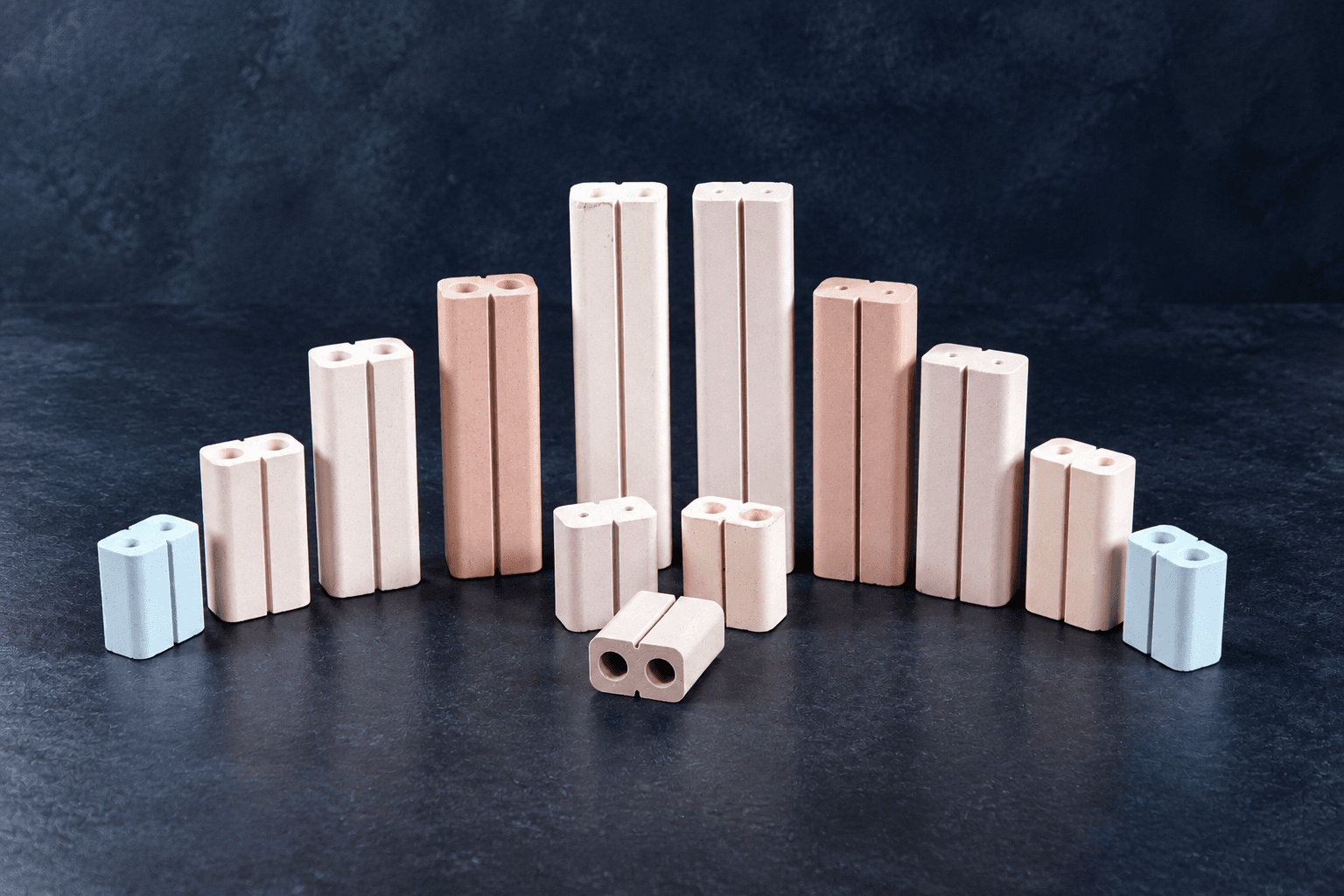
Core Ceramic Performance Properties
In ceramic component design, performance is defined by failure conditions: heat, stress, wear, electrical load, and chemical exposure. The properties below are the primary engineering factors used to predict performance and select the right ceramic solution for each application.
Thermal Insulation
Reduce heat transfer and maintain thermal barriers. Critical in applications where thermal energy must be controlled, contained, or isolated to maintain system stability in high-temperature environments and prevent heat-related failure or inefficiency.
Electrical Insulation
Prevent electrical conduction in high-voltage systems. Essential for maintaining isolation, signal integrity, and system safety in environments where electrical breakdown cannot be tolerated. Ideal for components that must resist electrical current while maintaining long-term reliability such as insulators, feedthroughs, and high-voltage electrical components.
Wear Resistance
Maintains surface integrity under friction, abrasion, and particle erosion.
Used in applications where repeated mechanical contact or abrasive flow would otherwise degrade performance or shorten service life.
High Temperature Applications
Maintain performance and functional stability in sustained extreme heat environments. Critical for systems operating continuously at high temperatures where material deformation or property loss is not acceptable.
Thermal Shock Resistance
Withstand rapid temperature changes without cracking or failure. Required in environments where components cycle quickly between hot and cold conditions that induce thermal stress.
Corrosion Resistance
Resists chemical degradation in aggressive or reactive environments.
Enables long-term stability in exposure to acids, alkalis, and chemically harsh process conditions.
How to Select the Right Ceramic Performance Property
In most applications, multiple performance properties must be balanced rather than optimized in isolation. Our engineering team helps match performance requirements to material systems and manufacturable geometries.
Key selection criteria include:
- Maximum operating temperature
- Thermal cycling frequency
- Electrical voltage or insulation requirements
- Mechanical load and wear conditions
- Chemical exposure environment
- Required dimensional tolerances
Industries That Rely on Ceramic Performance Properties
Ceramic performance properties are critical in industries where failure is not an option:
- Aerospace & Defense
- Energy & Power Generation
- Industrial Processing & Furnaces
- Electronics & Semiconductor Manufacturing
- Medical Devices & Analytical Equipment
- Automotive & Transportation Systems
Materials That Deliver Performance Properties
Performance properties are directly enabled by material selection and formulation.
Common ceramic materials include:
- Alumina (Al₂O₃)
- Zirconia (ZrO₂)
- Cordierite
- Steatite
- Spinel
Common Applications of Ceramic Performance Properties
Ceramic performance property considerations have already been taken into account for our commonly made parts such as:
- Electrical insulators and feedthroughs
- Furnace tubes and kiln components
- Wear liners and abrasion plates
- Semiconductor processing components
- Precision spacers, mounts, and housings
- High-temperature structural components
Frequently Asked Questions
What determines ceramic performance in industrial applications?
Performance depends on material composition, microstructure, and manufacturing precision, especially firing and machining tolerances.
Which ceramic property is most important for high-temperature applications?
High-temperature stability and thermal shock resistance are typically the most critical factors.
Can ceramics be engineered for multiple performance properties at once?
Yes. Many applications require a balance of properties such as wear resistance combined with electrical insulation.
How do I choose the right ceramic performance property for my application?
Selection is based on operating temperature, mechanical load, chemical exposure, and electrical requirements. Engineering support is typically required.
Ready to Discuss Your Application?
Whether you're developing a new component, searching for a better supplier, or scaling an existing design into production, our engineers are ready to help.