

Alumina Ceramic
High-Strength Ceramic
Alumina (Aluminum Oxide, Al₂O₃) is a widely used technical ceramic due to its exceptional balance of mechanical strength, electrical insulation, wear resistance, and cost-effectiveness.
It is often selected for industrial systems where metals wear out, plastics deform, or electrical components fail under heat, load, or corrosion. It is a common replacement for steel, stainless steel, tungsten carbide and engineering plastics in high-friction or electrically sensitive systems.
It’s a great option when components must:
- Resist extreme wear and abrasion in high-friction environments
- Maintain structural integrity at high temperatures
- Provide reliable electrical insulation in high-voltage systems
- Withstand corrosive chemicals and harsh media
- Replace metals that deform, oxidize, or conduct electricity
Important: Key advantage:
Alumina delivers long service life and reliable performance at a lower cost than many advanced technical ceramics.
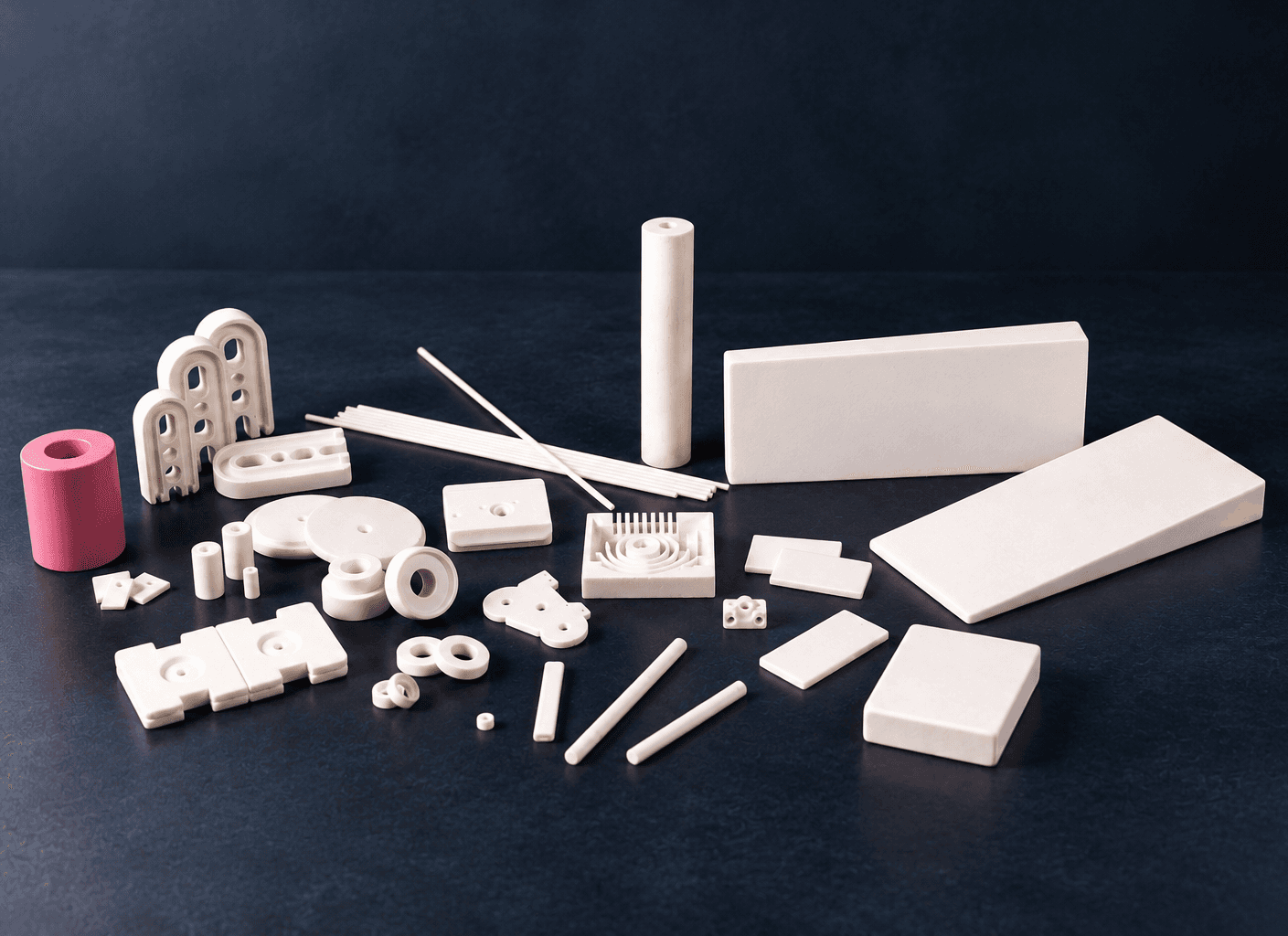
Key Properties of Alumina Ceramic
Aluminum Oxide (Al₂O₃) is a dense, polycrystalline ceramic composed primarily of aluminum oxide, typically ranging from 80% to 99.8% purity depending on application requirements.
At Associated Ceramics, we manufacture precision alumina components through controlled sintering of refined alumina powders at high temperatures, resulting in a dense, rigid, and chemically stable material.
Core properties:
- Extremely high hardness (Mohs ~9; second only to diamond in industrial materials)
- Excellent electrical insulation (even under high voltage and high temperature)
- High compressive strength and good flexural strength
- Strong resistance to wear and abrasive environments
- Excellent thermal stability and heat resistance
- Excellent corrosion resistance against acids and alkalis (varies by concentration and temperature)
- Dimensionally stable under thermal cycling
Common alumina grades:
- 85% Alumina – economical, general industrial applications
- 96% Alumina – balanced performance and machinability
- 99.5%+ Alumina – high-purity electrical, semiconductor, and wear-critical uses
Alumina Ceramic Technical Specifications
| Property | Typical Range |
|---|---|
| Composition | Al₂O₃ (80%–99.8%) |
| Density | 3.6–3.9 g/cm³ |
| Hardness | ~1500–2000 HV |
| Flexural Strength | 300–500 MPa |
| Compressive Strength | 2000–3000 MPa |
| Max Operating Temperature | ~1500–1700°C |
| Dielectric Strength | Excellent (high-voltage insulation) |
| Thermal Conductivity | Moderate (grade dependent) |
| Thermal Expansion | Low |
Alumina Ceramic Applications by Function
Alumina is used across industries where reliability under stress is essential. Applications are typically defined by function rather than industry:
- Electrical insulation components (high-voltage systems, feedthroughs, spacers)
- Wear-resistant mechanical components (liners, guides, bushings)
- High-temperature furnace and kiln components
- Fluid handling systems (valves, seals, nozzles, pump components)
- Semiconductor and precision manufacturing tooling
- Corrosion-resistant components for chemical processing systems
Custom Alumina Components We Manufacture
Associated Ceramics produces a wide range of precision-machined alumina components, including:
- Alumina rods, tubes, and plates
- Electrical insulators and spacers
- Wear-resistant nozzles and flow components
- Pump and valve parts (seats, seals, bushings)
- Custom machined structural ceramic components
- Semiconductor and analytical equipment parts
- High-temperature furnace fixtures and supports
Each component is engineered to meet tight tolerances and application-specific performance requirements.
Industries That Rely on Alumina Ceramic
Alumina ceramic components are used across high-performance industries where failure is not an option:
- Semiconductor manufacturing and electronics
- Industrial machinery and automation systems
- Aerospace and defense applications
- Chemical processing and corrosive environments
- Medical devices and analytical instrumentation
- Energy and high-voltage electrical systems
- Automotive and transportation engineering
Frequently Asked Questions About Alumina Ceramic
What is alumina ceramic used for?
Alumina ceramic is used for electrical insulation, wear-resistant parts, and high-temperature applications where metals or plastics would fail.
Is alumina ceramic conductive?
No. Alumina is an excellent electrical insulator, even at elevated temperatures.
How strong is alumina ceramic?
It has very high compressive strength and hardness, making it ideal for abrasive and load-bearing environments.
What industries use alumina components?
Industries include electronics, aerospace, medical, chemical processing, and industrial manufacturing.
Ready to Discuss Your Application?
Whether you're developing a new component, searching for a better supplier, or scaling an existing design into production, our engineers are ready to help.